Featured

The adventure begins . . .

I am finally taking a gap year and competing in the Clipper Round the World Yacht Race which starts from Liverpool on the 20th August 2017.  You can see the route here.

IMG_4731

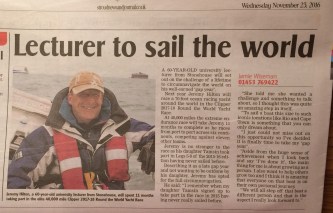
The weeks of training that began last September are nearly complete, lots of kit acquired and I’m now getting my house ready to rent out. Even the press was interested ??

I blame Tamsin. She’s my daughter and having never sailed before, phoned me one day to tell me she had signed up for he final leg on the 15-16 race to sail back from New York to London!! Totally floored me. In the end, she sailed the last 3 legs beginning in Qingdao and raced to Seattle, through the Panama canal to New York and then back to London via Derry-Londonderry-Doire.

img_4942.jpg

Last Saturday was very exciting as we went to Portsmouth for crew allocation; a day long awaited as we found out who we’d be sailing with. I’m delighted to be sailing with a great team under Dave Hartshorn in Team David (yet to have our sponsor announced).


That shoulder catches up with me

It’s just over 9 weeks since I had the operation to repair my rotator cuff, and I hope to lose the sling and start rehab. Having not been able to use it properly for so long means it will be a long recovery period. I carried on after injuring my shoulder between Fremantle and Sydney, vaguely optimistic that it might improve after my visit to A&E in Airlie Beach where they signed me off to carry on with the race. I knew it wasn’t quite right, though, and it wasn’t improving. I found the Pacific leg challenging, difficult to move about, so decided to have it properly checked out in Seattle.  An x-ray didn’t find much, as expected, but an MRI showed I had a “full thickness tear of nearly the entire supraspinatus tendon” which “involves the anterior fibres of the infraspinatus”. In layman’s terms it meant that I could just lift a cup of tea to my mouth, but not a kettle to make one. Also, I was unable to lift my arm above shoulder-height. I asked what the impact would be if I waited until August to have it repaired, and was told that it might not heal as there was “fatty atrophy in the infraspinatus”. It was an easy decision in the end, as I need to have a properly working arm, so after just over 26,000 nautical miles, and an interlude in South Africa, my race was over.

I was disappointed to finish there as I had asked to relinquish the Mate role so I could get back to proper sailing. I was going to be Pip’s assistant watch leader which would have been fun and very rewarding. However, for many reasons, not least that I am now well on the way to recovery before returning to work on the 1st Aug, I am now reconciled to not having done legs 7 and 8. I most likely will return to the 19/20 race to complete Leg 3 from Cape Town to Western Australia, having missed it this time due to our shipwreck on Greenings.

Seattle was a great stopover, made memorable by Seumas and Laura buying a flight for Susan, Seumas’ mum, to come out. Susan and I met in Cape Town at prizegiving. We ‘clicked’ and then corresponded during my S Africa interlude and during the race from Fremantle to Sydney. Susan decided at the last minute to fly out to Sydney to see if we got on as well in company as we did in writing; a wonderful surprise, and we did 🙂 Not expecting to be together again until New York, where Susan had already arranged to come out to see Seumas, her coming to Seattle was a real bonus. Also, Adam and Tiffany came out to Seattle for a holiday and to see me, but also got engaged! (Planning to get married in Sept 19.)

What Susan didn’t expect was for me to return to the UK with her, and move in with her as I wasn’t going to get my house back until 1st August.  She has also been brilliant in keeping me sane and driving everywhere the whole time I have been in a sling. We’ve been to New York and Derry/Londonderry to to join the celebrations (and a bit of sail repair for me) and will be in Liverpool this weekend for race finish.

Some reflections on the storm.

Was it the wind howling in the rigging, the erratic movements of the boat, the sudden acceleration accompanied by the whooshing and surging of water over the rudder blades just behind me, or was it the shouting of crew members trying to communicate above the noise of the storm as they fought to keep the boat under control? I’ve had never experienced the like and being below was, quite frankly, terrifying. My role was there, monitoring progress and navigating the storm trying to ensure the worst was avoided. I had to place his trust in others who also had never experienced the like, who fought their own fears to carry on sailing through the hurricane. One experienced crew member was heard to comment that the 35kt boat speed he achieved was enough and he’d like to slow down now please. It’s always sobering when you reach and stretch the edge of your comfort zone, and I was there for around 36 hours.

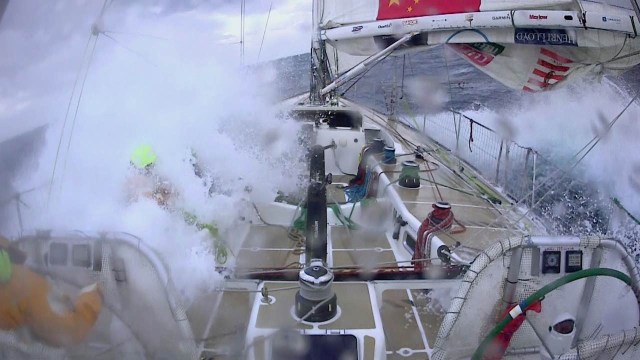
We were told later that the waves were of phenomenal height, greater than 14m, or the height of 4 double decker buses stacked on top of each other. Forget fairground rides, nothing will ever beat this experience. On the second day I joined Blue Watch for a couple of hours and looked around in amazement at the panorama surrounding me. Riding the switchback of towering waves and seeing waves breaking on waves, with each covered in wind-blown ripples. Periodically a wave would break over the side of the boat, higher than head-height requiring me to make sure I was braced. (The image below was taken on Sanya around the same time.) If not, and it happened, crew were washed to the extent of their tethers and would emerge spluttering from the draining water. Sanya_Serenity_Coast_Deck_Camera-jpg_4252The previous night 5 had their life jackets auto-inflated by the volume of water coming across the boat. Spume was streaking across it all, with a mist of spray blowing over that. The colours of the sea were many shades of blue through to a creamy turquoise. In addition to keeping the towering waves behind us so we weren’t rolled over, the helms negotiated a route down the steep slopes such that they tried to avoid heading straight into the depths of the trough. The skipper nearly didn’t make it once, and the bowsprit dug into the wave ahead. The boat almost stopped dead from a speed of around 25kts, paused, then pirouetted about its bow, rolled sharply and then set off up the slope as the bowsprit emerged, somewhat bent.

Two days later we’re sailing under our medium spinnaker with a full mainsail, with calmer seas and had portholes open during the afternoon to help the boat dry out. It’s as well that personal kit is stored in dry bags as some of the cave lockers and bunks get soaked. Smiles and laughter have returned along with banter as a more self-confident crew, enhanced by the experience, relish the conditions; what’s 30kts compared with 75?

It’s so still and windless

In the summer at home, we dream of calm sunny, cloud-free days. Even in the winter, those crisp, cold, but sunny days are a bonus. However . . .

We are still drifting across the Yellow Sea. The fog has lessened, and the days are sunnier, but the wind is absent. We averaged 1kt over the last 10 hours and we are expecting the wind to start to arrive on Friday, 3 days away. That makes it a week or more to get to Japan, and we’ve still got around 4,000 miles to go.  We’ll probably be late into Seattle as we are unlikely to make the time up. Indeed, this race could produce the record for the slowest crossing.  The weather is unpredictable, so we may end up with days of favourable winds; let’s hope so.

The race to Qingdao was quite eventful.  We gained two points in the scoring gate, but lost places when we had to thread our way through a few hundred miles of fishing fleets.  The first 50 miles were through fleets of boats towing nets in pairs or packs at slow speed, and then the next interminable set of fishing boats were laying out miles of nets.  When I say miles, each net would have floats 1/2 mile apart and may be 12 -15 miles long.  Each row was a mile apart. We negotiated these mainly under spinnaker, so our gybing became very good.  The main challenge was not seeing where these nets would be set up as our navigation system only picked up the fishing boats about 10 miles away, and sometimes it was difficult to differentiate between the floats in the nets and the boats themselves. On deck, all seemed calm with a few boats around, but down below the navigation screen was full of hundreds of targets.  In collision regulations, though most vessels under power give way to sail (yes, even 300m long tankers will change course for us), we have to avoid fishing boats. They seem to have taken pity on us in the last few days as we are hardly moving.

You may be pleased to know the code 1, our largest spinnaker, was flying again yesterday and looks good.  This was the one that we blew on the final morning racing into Sanya. After 3 days in Sanya and 4 days in Qingdao, we finally sewed the last patch and repacked it. I will try to put up some photos when we eventually get to a Seattle.  Having spent so long on it’s repair, I was at a loose end for the last afternoon in Qingdao, so jumped on to a visit to the Rice Wine factory and the Tsingtao brewery. The rice wine brewery very much reminded me of my apprenticeship with Courtaulds and the smell of the solvents used in spinning Celon . Revolting, I’m afraid. Still, the brewery came up trumps and fed us well.

The biggest challenge in china has been getting onto email and WhatsApp. Most sites are blocked and even with a VPN, access was difficult.  WeChat is usually an acceptable way of calling across the internet from China, but even that was difficult at times.

The marina we stayed at in Qingdao is brand new and built on a brand new island that is only just on charts. It is about 30 miles east of Qingdao, and the area is being developed by Wanda, the film company to attract the film industry and doesn’t open until April. It was eerie seeing so many empty blocks of flats, massive hotels and mansions. Not surprisingly, there was only one other yacht in the marina! Still, our reception and departure was fabulous. Qingdao is the longest race partner and I think Clipper have been coming here for 10 years.

We’ve had some great new joiners on this leg, some of whom have done previous legs of this race. We’ve also gone to a 3-watch system, though Dave and I still have our own routine. This time, however, we’re 6hrs on and 6hrs off, rather then 4 on and 4 off, which does make for a better sleeping pattern which is good.  With the weather as it is, every one is getting enough sleep, but I’m sure we’ll appreciate the benefits when the wind returns. . .

Love J

There’s hot, and then there’s HOT! (The race to Sanya)

Let’s get it out of the way, this has been the longest sustained period of HOT that I have ever known; not surprising as I come from the UK. However, 26 days of hot is something we dream of, but then would complain. 35 C down below, and over 40C on deck defies any acclimatisation, and you just have to get on with it. This we did without anyone getting stroppy or antsy with anyone else.  It has meant being in T shirt and shorts all the time, including night time and squally showers. Indeed the showers were relished, and often accompanied by shampoo and soap. You had to read the length of the squall, though, otherwise you had to rinse off with a saltwater bucket. Wendo, Matt and Bob have all sailed here on previous races, and all believed this to be the hottest. Nuff said.

What has been fantastic in this leg is the seas we have sailed through. The Great Barrier Reef, the Coral Sea, the Solomon Sea, The western Pacific and South China Sea, crossing the Mariana Trench at almost its deepest point (10,680m). It was quite sobering to be reading about the development of the sextant at the same time, as so many people risked and lost lives to chart this area. Not just Cook, but Banks, Phipps, Bougainville, Spencer, La Perouse, and Flinders amongst others. When Cook was charting the west coast of Australia, he was concerned to be inside the Great Barrier Reef, so found a way to get outside.  Great, but on another occasion, he was becalmed just outside the reef and the swell was inextricably moving him toward the reef. He couldn’t drop an anchor as it was over 120 fathoms deep (about 250m), but he was one wave length away from hitting the reef! Imagine that on your port side you can see the sea breaking on the reef about 30 feet away. Fortunately a breath of wind arrived in time which enabled them to crawl away. He then found a gap through the reef, got inside, and landed. Consequently, the charts around here make fascinating reading.

We had a poor start, then found the first of many windholes. This meant we lost the fleet and began to experience different weather. Sometimes this brought the benefit of seeing others find windholes, but it often meant we found our own. Another issue we were dealing with was that the boat behaves differently on the different tacks. We are 1 – 2 knots slower on starboard tack compared with the port tack.  Why does his matter? Well, a 1kt difference adds up to 24 miles per day, or 168 miles in a week. (The same argument works to encourage the crew to keep steering to course and constantly trim the sails for best speed.) This is a big disadvantage as most of the race seems to be on starboard tack (wind coming from the right). For this reason, and to understand how we are performing compared with the fleet, I developed a performance spreadsheet which is updated every 6 hours.  You can watch the race viewer, but all we have is the 6-hourly schedules giving boat positions. From this, though, I can compare miles run in each 6-hour period, our position (yes, I know, usually at the back) and, more importantly, how far behind (or ahead) we are from each boat, so can see our gains even when so far behind. You can imagine how helpful this is to motivate people when we caught up from nearly 400 miles behind, to 150 miles behind.

The kind of mishaps we have to deal with are generally equipment failure. We were flying our code 2 (medium spinnaker) when the strop and safety strop holding the block at the top of the mast failed, and the kite just fell into the sea. It’s difficult to stop quickly, so the kite ended up under the boat with its sheets and halyard and nearly wrapped around the keel and rudders. In the end, though, after a couple of hours, we managed to get it back on board with the block and all lines, but had a tear from the head to the clew (that’s long). The water maker filter holder cracked, and as a result was pouring seawater into the boat, and we couldn’t make water. We had enough for the last few days in spare water jerrycans. It was a surprise to walk into the galley to find water in the bilges up to the soleboards. It’s the quickest I’ve see Dave wake up when I told him. Having established the sail locker and accommodation bilges were dry, we relaxed (after pumping out the galley bilges) and checked all through-hull fittings. We realised we must be brining water in, hence checking the water maker.  It always seems to happen at night.

We had a kite wrap that tore quite a large hole in our code 1, either during the wrap, or when dropping it. That resulted in 16hrs in the sail locker and galley sticking it together and sewing it (I’m getting to be a dab hand with the sewing machine). It was ready for the final morning’s run into Sanya.

The final mishap was on that last morning approaching Sanya.  We were really hopeful that we’d beat Nasdaq and so not come last. It’s why I held the code 1 above its recommended maximum wind speed. I’d been watching the instruments like a hawk, hovering around 14kts apparent wind (suggested upper limit is 12kts), and noticed a squall appear alongside us on the radar.  The wind started to gust to 18kts, and I debated whether it was a gusty squall or just a bit of wind and rain. As I moved to the companionway to go on deck to ask for the kite to be dropped, I got my answer as a 50kt gust hit us. Needless to say, the kite blew apart. The challenge was that the clew (the corner with sheets attached) came in onto the deck as it should as this is how we bring the spinnaker in, but the rest of the spinnaker was streaming from the masthead, almost in two pieces as they were only joined by the front edge of the spinnaker which has a strong line running through it. I called for Dave to come on deck, and he looked at it and suggested we put the kettle on to think about it. If we let the halyard out it would only fly further away from the mast, and we couldn’t slow the boat enough to bring it alongside and, anyway, the wind would still blow the kite like a flag. Turning the boat would result in the kite getting caught underneath.

The only answer (unless you’ve thought of another), which Dave devised, was to bring the halyard down to the deck. Luise went up the mast to attach a carabiner on a long line to the halyard. This we used to bring the halyard to deck, and I slowed the boat so we could bring the tattered code 1 back on board.  It was Lu’s first, and probably last mast climb, and was a great job. So now we had both the code 1 and 2 to repair. Consequently, Sanya was busy. We did repair the code 2, but the code 1 needs professional help which we’ll get in Qingdao.

We also resolved the difference in speed of tacks. Our mast was slightly bent as a result of our knockdown on the way to Airlie Beach. As we had the data captured to support our theory, we got time from the riggers Harry and Henry to spend a lot of time looking, and then retuning the mast.

It’s paying off nicely now in race 8. We’re in 4th at the moment, and have mainly been on starboard tack . . .

Goodbye Australia.

Almost two months in Australia or Australian waters and it was a fabulous experience. Perth/Fremantle was my first taste, though the best part for me was meeting up with my old university friend Douggy Hodson and his wife, Helen. The years just seemed to roll back and Tamsin and I had a great evening with them after Douggy and I had a long walk the day before.
Fremantle was also where I rejoined the race with Great Britain. They gave me, JP and Paul a very warm welcome and it was a frantically busy period as we had little time to prepare the boat, and we were dealing with the aftermath of Simon’s death.
The race to Sydney stands out in my mind because of the weather and natural geography. We had some winds, but also a lot of wind holes. However the sight of Tasmania and its rugged coastline was fabulous the all the times we passed it (we did pass two more times) and I had to pinch myself that were were looking at Tasmania, and had sailed there!!!
Loved Sydney and Susan’s surprise visit, and would love to sail in Sydney harbour more. Parts of Sydney reminded me of San Francisco, and the atmosphere there, for me, was enhanced by the preparations for the Sydney Hobart race.
The Sydney Hobart Race was a bucket list event! A race I had wanted to take part in for many years. There is the expectation of difficult conditions and strong winds in the race which adds to its allure. The start was quite a sight with three start lines set.  We had the middle line, with the maxis ahead and the smaller yachts behind. The result was quite a calm start, though the beat up and out of the harbour was a challenge. The other Rolex race I’ve competed in was the Giraglia which starts in St Tropez, down to Hier, across to the Giraglia rock on the northern tip of Corsica and up to finish in Genoa. There the boats start in order of the slowest first so you have the pleasure () of the bigger and faster yachts sailing through.  I guess here isn’t room in Sydney to do this. The race was relatively uneventful, had a number of wind holes and our first taste of a southerly buster, though we would later realise this one was pretty benign.
The final stretch up the Darling river into Hobart was great fun, and I thought the whole area was just beautiful. Indeed, I loved Tasmania. Someone likened it to a warm Scotland, which I agreed with, so that will give you a flavour. We fought and held off Dare to Lead and Liverpool to cross the line just ahead of them. Actually the whole fleet arrived within 90 minutes – first to last! Quite astounding really.
Due to the race, Hobart was buzzing and great fun.  Lots of food and drinks to sample in the Taste of Tasmania exhibition and much beer to sample in the Customs House. Also, I had my first taste of a ‘dark and stormy’; the obligatory drink in the Customs House required to complete the race. Tamsin, Jp, Seumas and I had a great day out, including visiting an animal sanctuary where we saw Tasmanian Devils, wombats and fed kangaroos amongst other animals.
Then to Airlie Beach. I’ve already mentioned our knockdown, and we also experienced a number of windholes – these will be my abiding memory of sailing up past the east coast of Australia. Airlie Beach is sub-tropical and so began the hot and soggy part of this trip. You’d think being on the water would be cooler, but no, not really. On the last day of the race to Airlie we managed to completely trash our code one.  You can see this if you look at Clipper’s YouTube video of the Leg from Hobart to Airlie. First priority was to get this fixed.  I had to visit A&E to get my shoulder looked at, so Tessa, Jonathan and Dr Nick made a fantastic job of the initial sticking together of the pieces. On day 2, Jonathan, Katherine (Pip’s mum) and I added additional strengthening and tape to side two, and on day three, I sewed this up with help from Hannah and Emma. Poor Emma had just arrived, so had quite an induction in a hot sail loft with jet lag! One more half day of adding to patches and sewing them up helped by Krishna and Faith saw our code 1 back ready for use. I’m happy to say she flies really well, even if she looks a little frankenstinian.  I’ll post a piccy when I can.
It might sound strange, but the most enjoyable part of Airlie Beach as spending a couple of days sailing with Seumas and JP. Seumas was hoping to be examined on his yachmaster, and I had offered to take him through sailing on and off buoys and anchorages.  We did this through the whitsunday islands and had a fabulous few days that felt like a week. So relaxing and different to the race! The Clipper yachts don’t have a BBQ on board, nor do we have alcohol, though we do have music. Back to a final few days of mainsail repair, and off we go again to Sanya.
Funnily enough, I’m writing this use after we’ve left another windhole . . .

Another day in the office

10 January 2018

All is now well, and repairs are nearly complete; JP is up the mast completing the final bits. We are sailing up past Sydney and, possibly due to the recent extremes of heat there, we watched the most incredible electric storms last night. I’ve never experienced the breadth, extent and ongoing nature of the lightening – some forked, but mainly massive sheets, seemingly the whole sky at times. I’ve been coaching new helms, and was working with Claire to cope with rougher, confused seas and variable winds. Massively challenging as the night got darker and darker, with bigger and brighter flashes of lightening.

We had full main, staysail and our biggest Yankee up, appropriate for current conditions, but then it got too much, so Phil took over as he is much more experienced. In retrospect, these factors should have been a clue as we knew the wind was due to shift South. Suddenly it did. From 15kts to gusts of 60 to 80kts and a wind shift of 160 degrees! We broached and were pinned virtually flat on the water on our left hand side. We managed to ease the main and the Yankee so the boat rose up, only to have a chinese gybe and the boat immediately went down on its right side, hove to. This time we were completely pinned flat on the water, with the mast touching the sea, and half the cockpit under water. The wind was blowing us sideways at 3-4kts. I hate to think what it felt like down below. Most of us had been clipped on with short tethers on the high side, but this was now the low side, so lots had to fight to move to the new high side.

Can you picture the helming stations? I was now ‘stood’ on the side of the right hand helming station ‘lying’ across the deck and holding onto the bottom of the left hand wheel steering the bottom keeping her hove to. However, I was actually standing upright. Many others were in a similar situation with a 5m cliff to climb to get to the high side. Andy managed to work with the pit crew to drop the mainsail into its 3rd reef (smallest size) and drop the Yankee as far as possible without putting anybody onto the fore deck. This meant standing on the side of the cockpit, and reaching up to use winches that are now level with their shoulders!

Now safe and in control, we sat for about an hour until the storm abated. All I had to do was hold the wheel hard over to keep the boat hove to. At that point we could complete the reefing, drop the Yankee and set sail conservatively with fully reefed main and staysail, planning to check the rig and sort stuff at first light.

It sounds horrendous, but in the moment everyone on deck calmly got on with what was required under Andy’s clear direction. Probably not so easy for those down below who could only be passengers and trust those on deck. I found out later that Andy had been down, told them to put on foulies and prepare to abandon ship. However, when we returned to a normal angle, they did an amazing job of clearing up what must have been carnage down below, as many of the food lockers had emptied across the galley.

This happens rarely, and is very localised. We had had someone watching the radar for squalls, and they were tracking one two miles away. Apparently the screen just filled with squall a couple of miles across as our squall formed on us! The other watch is on this morning, so should have us back sailing, probably under spinnaker, by the time we come on watch at 4.

4 days later we had similar conditions, so whilst almost becalmed, we dropped the Yankee, fully reefed the main, and set the boat on a suitable course, even though we had no wind at the time – bizarre, perhaps. However, Dare to Lead were only around 7 miles south of us and we could watch them on our navigation system. Sure enough, as the southerly buster hit them, their speed increased from 2 knots to 14 and they charged off. We put out boat on the same heading and round 5 minutes later were storming along at almost 14 knots! A wild and exhilarating ride that lasted for around an hour before the winds abated.

Injuries, the albatross and that beach

11 Jan 2018

It started with an innocuous, gentle fall. We were flaking a Yankee into its bag at the end of our refresher sal in Fremantle when I fell backwards. You know how you prop yourself up on an elbow when lying down? That’s how I landed, on my elbow; hard enough to do something to my shoulder, but not hard enough to interrupt the task in hand. Over the next few days, I found it increasingly painful to raise my arm up. Some call it painful arc, some a frozen shoulder. Tessa, our doc in the crew checked me out, it was soft tissue damage, and suggested applying ibuprofen gel which seemed to help.

The next one was a fall a couple of days out of Fremantle. I was at the back of the boat just behind the helming stations at night, and might have been helping myself to some wine gums from the packet when a wave caused a violent lurch and I went straight down landing on the back of my head on the side of the boat. OW! doesn’t quite describe it. Unfortunately, in doing so, I also knocked the same shoulder. That led to a quiet 24 hours down below, but no lasting effect.

The third episode was a day or two later when we were back on the 45. I was crossing the galley from one side to the other, holding on to the post at one side, when I missed the anti-slip strip and my feet went out from under me. I held on to the post so didn’t go crashing into the port wet locker, but gave my (same) shoulder a massive wrench. Now it was quite difficult to move around the boat and couldn’t do anything physical. Hmmmmm, deadweight, methinks.

One of the challenges I had set myself was to develop mental stamina and the ability to keep going, just as an albatross does – day in and day out; doing everything on the wing. I’m usually more of an ideas person and can see things through to conclusion, but I don’t like routine. For example, knowing my teaching timetable years forward is bad enough. But having Monday morning 3 times a day, day in and day out (watches) means you really have to get to like Mondays, and routine. Now add in a chronic injury which is with you all the time, and limits what you can do, developing the albatross is all the more challenging – going to be awesome when I get there 😳.

Now add that Beach. Deciding to carry on with a new boat was difficult as, for me, my race had finished on a beach south of Cape Town. A new crew to get to know, another skipper to fall in line with and an unknown racing potential. Keeping going had become a real challenge. The shoulder didn’t improve significantly in Sydney, but I made progress in Hobart until I threw my bag on board with the wrong hand 🙄. I also have some different anti-inflammatories which are helping now, and Airlie Beach approaches. At the very least, I need to be fit for the Pacific, properly fit for a challenging 5 weeks from Qingdao to Seattle.

Time for a proper consultation methinks.

Sydney

8 January 2018

I had been so looking forward to sailing into Sydney and I wasn’t disappointed. Well, it was slightly marred by Nasdaq appearing over the horizon as we approached the heads and, as they were sailing much more off the wind than we were, therefore sailing much faster, they beat us into the harbour. What followed was an amazing battle for the line, covering each other gybe for gybe. For others in the harbour, it was a glorious Saturday afternoon, with lots of other races going on. The ones we particularly noticed were a fleet of tiny optimists, crewed by 8-year olds and around 6 feet long, and another fleet of small 2-person dinghies crewed by young teenagers. These seems to magically disappear as we approached them; not scattering, as they have exactly the same sailing rights as we do, but shepherded away. Only the ferries ignore everyone, claiming the right to go exactly where they wish with a large blast on their horn if anyone offends them by not moving. Indeed we were following a collision between a ferry and a yacht on channel 16, the emergency channel, where sailors from the yacht ended up in the water!

So close was our finish after 14 days at sea, that it was finally announced a draw; a first in Clipper’s history. That decision took a couple of days and, at the time, we were given victory so entered the marina first. This sounds exciting, and it was for us, but we were quite a long way behind the leaders. Yes, Sanya and Tamsin had won, pretty much as expected, and there was quite a party at prizegiving to celebrate that.

We were berthed at the Cruising Yacht Club of Australia who also co-host the Sydney-Hobart race. Therefore we were surrounded by many other yachts congregating for the race, due to begin on Boxing Day. Naturally, the buzz grew as the day approached, and there were quite a lot of final touches to complete. Our key one was to get sail numbers stuck on all the spinnakers and Yankee 1. This would have been straightforward if our number pack had included the number ‘7’, quite important when your number is GBR 730X! In the end, we arranged to get our own printed, very kindly organised by Tessa’s cousin Chris. However, with so much going on with 100 or so boats getting ready, they arrived at the last minute, and our days were interrupted by coming in to work on the boat on a number of days on the off-chance the numbers had arrived.

We did get the chance to sail in Sydney harbour as 4 Clipper yachts took part in a corporate regatta. We had staff from Sydney Airport on board, and the others had other companies taking part. There was a good, but light wind for the 2 races, and we won! Not that I’m competitive, but it was a good feeling. Sydney Harbour is fabulous to sail in and, with the various beaches and destinations round it, is a very attractive destination.

I have to say that I couldn’t get my head around a hot and sunny Christmas. In the end, we had a Christmas Eve meal in our Greenings air bnb, initiated by Matti. On Christmas Day a few of us went to walk from Bondi beach to Coogee and then into Sydney where Claire had found a restaurant were we could barbecue our own food, buying all we needed in the restaurant.

So, in the end, we had a traditional Aussie barbee on Christmas Day.

Jx

Back to Sea…

It seems quite surreal, sailing up the south west coast of Australia, especially as most of the journey was by sail. Right now, though, our progress is minimal due to no wind, again!!!

Team GREAT have been fantastically welcoming. The new Leg 4 joiners welcomed me in Freo before GB came in, and then we all pulled together to turn the boat around for the Leg 4 race as those who had been on board took a very necessary period of time off. Yes, the mood was somber following Simon’s death, but spirits lifted once we started and the race progressed.

Simon was a watch leader and GB’s coxswain, and I have taken over those roles. Having been bosun on Greenings, I have now taken over Simon’s role as the one responsible for the sails and sail repairs. This, however, is very much a team role, and Tessa (our doctor) is brilliant. In addition, the Maritime Coastguard Agency, having investigated both Simon’s death and in light of our putting Greenings on the beach, required Clipper to put a mate on board to work alongside and support the skipper.  They initially wanted qualified offshore yacht masters with a commercial endorsement. However, following Clipper’s response, they dropped the need for a commercial endorsement which was key as Clipper had 4 days to get a mate on board each yacht. I am one of three qualified offshore yacht masters in the fleet who were happy to step up to mate, and 8 others were found and arrived the day before race start. In reality, though, this changes little in how GB is run.

I intended to do Leg 4  with Tamsin and then consider completing the race after we got to Airlie Beach. However I am very happy on GB and have come to terms with my own race coming to an end on the beach south of Cape Town. Now, for me, it is about the experience, sailing with some wonderful people and seeing some great sights. I’m enjoying passing on skills and knowledge and helping those new to sailing to ‘join all the dots’. Hannah, our hockey Olympian, still doesn’t quite ‘get’ sailing, though is getting stuck in to all aspects and is developing as a good helm, and finds some of the conditions, such as no wind, very challenging. It has been fascinating talking with her about her training schedule and way of life that led to Gold. Yesterday we had around 50 dolphins in a very large pod come and play with us for a while. The cliffs on the west coast of Tasmania are awesome, and I was totally blown way with the most incredible sunset last night. The colours and patterns in the clouds, and how they changed and developed after the sun had disappeared is a sight many of us will not forget for a long while.

Leg 4 weather has been challenging in its extremes. Approaching Tasmania in the Southern Ocean south of Australia, we were running under full main, our Yankee 1 (the largest one) with winds gusting 43 knots, and surfing up to 18 knots boat speed. Very exciting for those new to these conditions. We also had similar conditions at night, though the situation was worsened by the completed lack of stars, and a sky full of dark clouds resulting in guiding this 35 ton surfboard into inky blackness at crazy speeds with no references apart from a compass in front of you and wind indicator at the top of the mast. The electronic Garmin wind direction indicators have too much delay in them for them to be of any help. The additional help the helm has is a second helm person whose eyes are pretty much glued to the masthead wind indicator and calling “come up”, “hold” or “bear away” as required. These techniques worked for those few of us with helming experience, but was too challenging for the new helms.  One of the biggest difficulties is the transition of daylight helms to helms who can cope with night under difficult conditions. We had two on our watch who took up this scary challenge (first time is terrifying), JP (Janette) and Hannah, and were fantastic. I can only liken it to gaining an instrument rating flying aircraft by flying blind through a storm! The additional challenge is to do this whilst flying a kite. Last night we had to drop the kite soon after dark because of the wind/sea conditions and shortage of night helms.

So, a massive contrast when back on watch today with bugger all wind . . .

Sydney and a wonderful visitor await, and I’m going to have to cope with Tamsin’s success on Sanya . That isn’t a surprise and I am really pleased for her and the crew of Sanya.

Love to all x

My South African Interlude

I will be joining Great Britain for Leg 4 to race against Tamsin, and probably carry on with them if all goes well. So I wasn’t going to go back to the UK and then back out to Fremantle, was I. So what to do?
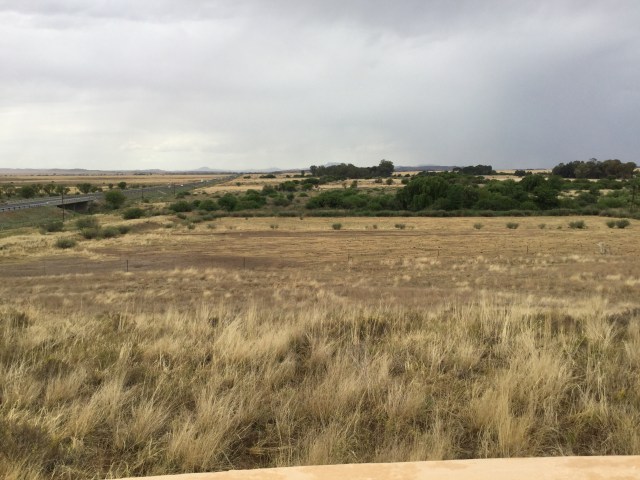
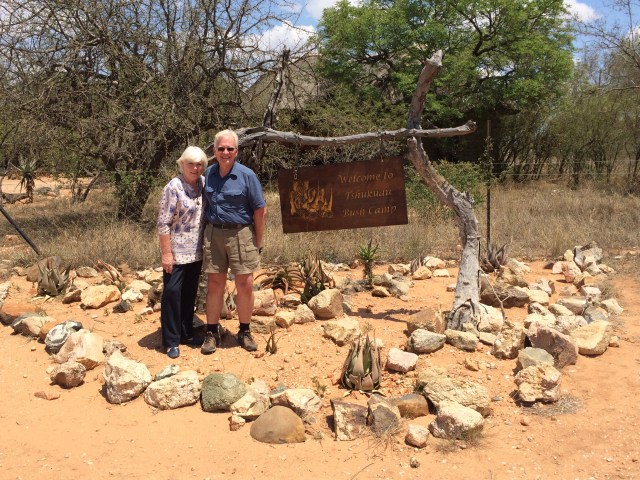
I decided to hire a car to explore the Garden Route, visit Bloemfontein to walk a Boer War battle site, stay with Niall and Caroline Beazley in Johannesburg and then go to Tshukudu Bush Camp, near the Kruger National Park, with Jan and Kitty Potgieter, JP’s parents (JP is a good friend in the Greenings crew).

First stop was Mossel Bay where I did not a lot for a couple of days. I couldn’t stay much closer to the beach 😎, and walked, visited the Diaz museum, eat fish off the braai, drank great coffee at the Blue Shed Coffee Roastery and generally recharged my batteries. From there I went in to George via Plattenburg Bay and Knysna, but forest and bush fires had taken their toll and the countryside is still very much in recovery mode.

When I served in the Gunners, I commanded Q Battery who had won a collective VC at the Battle of Sannas Post in the Boer War. I knew the story well, but couldn’t understand how the Boers had been so successful; I had wanted to walk the ground for many years.

I won’t go into the details here as they can be found on Wikipedia, suffice to say I now understand and have great respect for what was the first Boer commando-style action.

I have known Niall since Army days where we sailed together, and he moved to South Africa in the 1990’s. It was a great opportunity to stay with him and Caroline in Johannesburg for a couple of nights. It was a fabulous visit and Niall showed me various aspects of the northern part of Joburg. It really reinforced my feeling of South Africa being a land of incredible contrasts, socially, politically and geographically.

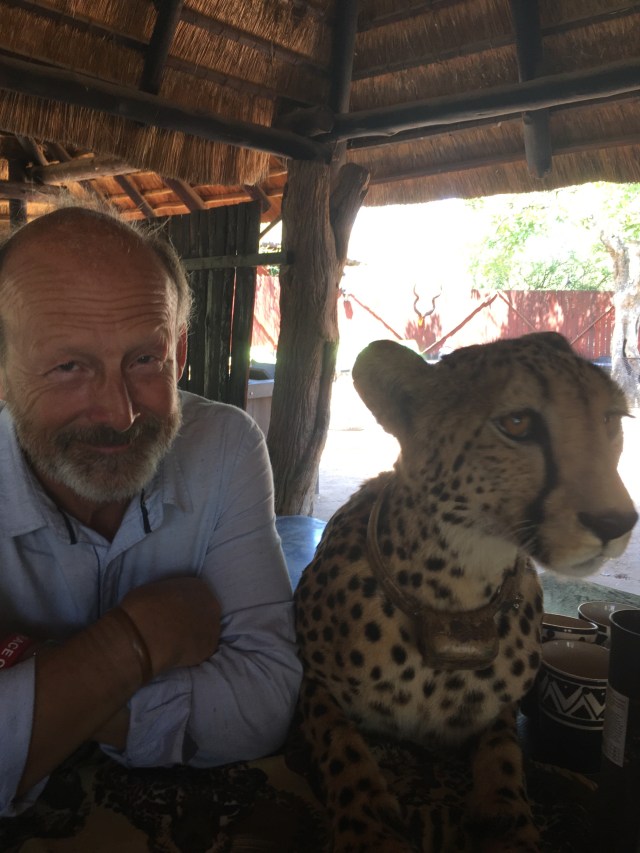
JP (Janette, pronounced Yanette) is South African, living in England, so her parents came to Cape Town to spend time with her. Consequently they had to meet many of the crew too. We got on well, and Jan offered to take me into the bush one day. We all thought this would be in a year or two’s time, so when we put Polly on the beach, the opportunity arose. Jan and Kitty took me to Tshukudu Bush Camp for a fabulous couple of days, for which I’m massively grateful. Saw lots, including lions, rhinos and buffalo, but the elephants and leopard eluded us. I’ll just have to go back 😉. A special moment was with Etombi, below. She was raised at the camp, but lives wild and visits when she wants to!

I’m now in Fremantle and Great Britain is due in on Saturday evening. To give the crew some days away following the tragic death of Simon Speirs, the new joiners and some supporters who have flown out specifically to help will clean and prepare the boat for the next race.

Time to get back into it. Tamsin arrives next Monday to join Sanya Serenity, and will be staying with us in the Greenings house. Battle commences on the 2nd Dec . . .

Love to all, xxx